Thursday, May 14, 2020

Day 104: Doctors without Filters

The world stands at 4.5 million cases and 303,000 deaths, with Russia still chugging along at 10,000 cases a day in its quest for Spain's second place seat. India is very close to exceeding China, despite China's renewed testing in Wuhan after new cases were reported there.

Things are fairly calm in the US, with active cases flattening out. Though Illinois is looking a bit hot, it's too far behind New Jersey to catch up anytime soon. Massachusetts cases are up 2% today. The governor still doesn't seem to get that his order closing non-essential businesses expires on May 18th and everything legally reopens, unless he explicitly orders otherwise—not just hems and haws about a report coming out after the fact.

PJ Media has picked up on an anti-mask opinion piece by a neurologist originally posted at Technocracy News. Since there are no studies of preventing the spread of COVID-19 with masks, his model for masking is the flu, but he cites a literature review showing no evidence that masks prevented flu transmission. PlagueBlog has seen similar studies discussed before, and one consistent problem with them is that they're mostly about masking the well, not the ill (never mind the allegedly invisibly ill).

However, he does cover the base of not masking the allegedly invisibly ill. He says any kind of mask, whether ersatz or professional quality (though it's worse with N95 masks), will concentrate virus from the breather and send it back into their respiratory tract. In the case of SARS-CoV-2, with its penchant for entering the brain through your nasal passages (knocking out your sense of smell on the way), the last thing you want to do for hours on end is snort it back up your nose.
Now that we have established that there is no scientific evidence necessitating the wearing of a face mask for prevention, are there dangers to wearing a face mask, especially for long periods? Several studies have indeed found significant problems with wearing such a mask. This can vary from headaches, to increased airway resistance, carbon dioxide accumulation, to hypoxia, all the way to serious life-threatening complications.
PlagueBlog was particularly impressed by the N95 mask-wearing driver who fainted from lack of oxygen and crashed his car. The author also expressed some serious concern for the elderly and ill restricting their own oxygen supply with masks. He concludes with the usual argument for establishing herd immunity instead, but PlagueBlog believes that herd immunity is the outcome of a particularly successful immunization program (such as we don't have for the flu), and not something you get by just throwing up your hands and letting 'er rip.

Wednesday, May 13, 2020

Day 103: Safer in Court

It's not just our economy that was unprepared for quarantining 330 million well people instead of 1.4 million sick people; our court system is also unaccustomed to the sudden closure of churches and other non-traditional responses to The Disease Which Shall Not Be Compared To The Flu. The economy is quick to fold under assault, while the court system lies low and considers its arguments. But once it rouses itself, hold on to your quarantine-the-well orders, folks, because it's going to be a bumpy ride.

Today, with the legislature egging it on, the state supreme court of Wisconsin struck down the governor's attempted extension of a "Safer at Home" order. It fell partly on technicalities of how and by whom it was done, but mostly on the law in Wisconsin not permitting the wholesale closure of the state (at least not in the chapters cited as a basis for doing so). The whole thing is 161 pages long if you want to take a look for yourself.

In other legal fights, the governor of Texas is at odds with San Antonio and other big cities over reopening. The state's main point of contention is (allegedly) unlawful local restrictions and/or fines exceeding the state's existing coronavirus regulations.

On the free exercise front (no, not jogging without a mask—the First Amendment), a US District Court has struck down the governor of Kentucky's attempt to ban in-person church services. Though it's the same state, it is not the same case as the sixth circuit court case unbanning drive-in church services.

Elon Musk says Tesla is suing Alameda County for, basically, not doing the corona the way Trump does it. There's also some incomprehensible lawsuit going on in Nevada over who can prescribe (hydroxy)chloroquine and where; at least one county has already tapped out.

Massachusetts cases are up about 1.5% today. Judging from the governor's daily presser, we little people don't get to find out which businesses are allowed to open back up on Monday until...Monday. Even if the owners somehow get more warning than the rest of us, that hardly sounds conducive to resuming business.

In any event, it's Cities and Towns day today, and here's a new map for you. Things are so plateaued that I had to change the percentile scale to make the tiny bit of variety more visible. The hottest new hotspot is Hamden down at the bottom of Hamden County, the only spot to go up more than 100% in the past week. But it was only 20 new cases; Connecticut probably wasn't wearing a mask one day and coughed on them.


P.S. Some adjustments for mobile have been made to the map (in place).

Tuesday, May 12, 2020

Day 102: The Minks Have It

Once again Russia is in the mixed news; by surpassing the UK in cases today, they have raised the question of whether they have achieved second place after the US, or remain in third place after Spain. As readers may recall from Day 90, Spain reports only cases with PCR testing in their case count, but the ranking sites include cases from antibody testing. (Note that probable but untested cases are not included at all, leading to some serious undercounting there.) This disparity has exceeded 40,000 cases at this point. That may sound like a lot, but Russia will probably have its #2 title in under a week regardless even if they keep on burning down ICUs with defective ventilators.

In late April two Dutch fur farms were quarantined due to coronavirus infection in the minks, which showed respiratory symptoms. Roadblocks were set up pending testing of air and dust samples at the farms. Although the two farms were relatively close together (six miles apart), the minks were suspected to have been infected by workers at the farms. Although it's unclear from the reports what species of mink is farmed there, it seems that the European mink (Mustela lutreola) is endangered and hard to breed in captivity, while the American mink (Neovison vison) is more amenable to farming and is probably the infected animal.

Minks are related to ferrets, which have previously been shown to be susceptible to COVID-19, though the American mink is more distant from the ferret than the European version. So it's not surprising that in the crowded conditions of a farm the virus is (apparently) passing from animal to animal. (If you feel sorry for the minks, don't worry; fur farming in Holland is scheduled to end in 2024.) In fact, ProMED noted a preprint from China that used deep learning algorithms to conclude that bat and mink were likely intermediate species for the transfer of SARS-CoV-2 to humans.

Last week two more Dutch mink farms were quarantined with similar outbreaks. Some pneumonia deaths among the affected minks have been observed. Since it is now mink breeding season, it has also been discovered that the disease especially affects pregnant minks (unlike pregnant humans). Rabbit farms are also being screened for coronavirus, but no results have been released thus far. While no evidence of the spread of coronavirus from mink to human has yet surfaced, PlagueBlog recommends caution when farming mink (which remains legal in the US).

In other animal news, a French cat was reported infected at the end of April, and a robotic dog from Boston Dynamics is herding people in Singapore.

PlagueBlog is going out on a limb here and predicting that the uptick in Massachusetts cases will be 1% again today.

Monday, May 11, 2020

Day 101: Don't Sue the Sioux

The world stands at about 4.24 million cases, with 286,000 deaths. Reporting is mixed on whether Russia has achieved third place yet, but according to Worldometers, it's still at 4th place with 2,000 more cases than #5 Italy and 2,000 less than the UK at #3. In a surprise move, India has surpassed Canada on the way to China; both of them and Peru are hovering around 70,000 cases.

In another surprise move, Illinois, with 79,000 cases, has finally deposed Massachusetts from our longstanding place at #3. (That's what we get for plateauing on at slightly less than a 1% increase in cases today.) Also, a couple of Sioux nations have gone full-on Rhode Island, setting up checkpoints on highways to protect themselves against coronavirus. Just like Cuomo threatening Rhode Island, Governor Noem of South Dakota has threatened to sue the Sioux. Since the tribes appear to be well within their rights on this one, state lawmakers are urging the obstinate governor not to throw money away suing the Sioux.

In other native news, Huffpost reports that the Navajo have edged out New York State for the title of most infected Americans per capita, with 1,786 cases per 100,000 versus New York's 1,751. However, Huffpost seems to have made the Navajo rate up out of 2010 census data, which is probably much more out-of-date than whatever the New York Times is using for their latest estimate of 1,760 cases per 100,000 in New York State. (Massachusetts is at 1,129, in case you're curious.)

Interlude: Mad Squirrel Disease

PlagueBlog apologizes for missing this 2018 account of a death from mad squirrel disease in Rochester, New York circa 2015. Mad squirrel disease (not its official name) has apparently been known for at least 35 years.

The risk of contracting Creutzfeldt-Jakob disease by eating squirrel brains was documented in the Lancet in 1997. It seems the skilled roadkill chefs of rural Kentucky are able to extract brains from squirrels (which is perhaps the most impressive part of the whole story), which they then scramble with eggs or add to a stew named "burgoo".

The Lancet article is still paywalled after a quarter of a century, but the New York Times reported on it at the time, giving away a good deal of paywalled information:
In the last four years, 11 cases of a human form of transmissible spongiform encephalopathy, called Creutzfeldt-Jakob disease, have been diagnosed in rural western Kentucky, said Dr. Erick Weisman, clinical director of the Neurobehavioral Institute in Hartford, Ky., where the patients were treated.

''All of them were squirrel-brain eaters,'' Dr. Weisman said. Of the 11 patients, at least 6 have died.

Within the small population of western Kentucky, the natural incidence of this disease should be one person getting it every 10 years or so, Dr. Weisman said. The appearance of this rare brain disease in so many people in just four years has taken scientists by surprise.

While the patients could have contracted the disease from eating beef and not squirrels, there has not been a single confirmed case of mad cow disease in the United States, Dr. Weisman said. Since every one of the 11 people with the disease ate squirrel brains, it seems prudent for people to avoid this practice until more is known, he said.
The journalists are also more specific about squirrel prep:
Families that eat brains follow only certain rituals. ''Someone comes by the house with just the head of a squirrel,'' Dr. Weisman said, ''and gives it to the matriarch of the family. She shaves the fur off the top of the head and fries the head whole. The skull is cracked open at the dinner table and the brains are sucked out.'' It is a gift-giving ritual. The second most popular way to prepare squirrel brains is to scramble them in white gravy, he said, or to scramble them with eggs. In each case, the walnut-sized skull is cracked open and the brains are scooped out for cooking.

These practices are not a matter of poverty, Dr. Berger said. People of all income levels eat squirrel brains in rural Kentucky and in other parts of the South. Dr. Frank Bastian, a neuropathologist at the University of South Alabama in Mobile, said he knew of similar cases of Creutzfeldt-Jakob disease in Alabama, Mississippi and West Virginia.
The self-styled "Official Mad Cow Disease Home Page" seems to have covered this story as well, even including a recipe for burgoo. Significantly for the timeline, they also included several references from the paper. Among them was a 1984 article, Creutzfeldt-Jakob Disease. Possible Transmission to Humans by Consumption of Wild Animal Brains, in which the wild animals considered were wild goats and squirrels.

And that's the smoking squirrel that takes us back 36 years, to a time long before mad cow disease. Needless to say, PlagueBlog recommends you remove and dispose of the brain and spinal cord before eating any mammal, whether it has been reported to transmit TSEs yet or not.

Sunday, May 10, 2020

Day 100: Length of Stay and Years of Life Lost

It hasn't been a hundred days of solitude yet; the PlagueBlog count is rather of 100 days of infection in Massachusetts, since our first infected student arrived ex-Wuhan. In today's milestones, the US hit 80,000 deaths, and Massachusetts had only a 1% uptick in cases.

I was inspired by a comment to look into some real numbers for length of stay in nursing homes. Back in 2010, a paper in the Journal of the American Geriatrics Society pegged the median length of stay at 5 months, with 53% dying within six months. There's a long tail that makes the average length of stay more than a year, and a significant sex difference that makes the median only 3 months for men but 8 months for women. Surprisingly, chronic conditions were not a significant factor.

The numbers were even older than the paper, so I looked for some newer data, perhaps reflecting improvements in geriatric care. The closest thing I found was a more recent paper in the Journal of Post-Acute and Long-Term Care, but the numbers were not directly comparable. They considered only medicare patients entering nursing homes for the first time. Even with those restrictions, the median length of institutionalization was still about 5 months. While some patients were ultimately discharged (rather than dying in care or moving between hospitals, short-term care, and back to long-term care), they often died soon after discharge. The mortality rate over the course of the year after first admission was 35%. (Note that the admissions year they used was a fairly average flu season.)

If you compare the reality of nursing home care to some journalism out there about years of life lost (YLL), the numbers don't quite add up. Just for example, a study out of Scotland calculates YLL from the usual sorts of actuarial tables, which indeed indicate another 10 years of expected life for the elderly age groups most susceptible to coronavirus—on average. However, the life expectancy of persons already in nursing homes is somewhere around 14 months from admission, and usually less than that by the time they catch coronavirus. So where the actual YLL lies between 0.6 and 10 depends on how many victims are coming from nursing homes.

Numbers coming out of Europe estimate nursing ("care") home deaths at about 50% of coronavirus deaths overall. In the US, the picture is more complicated, but in leading states like New Jersey, Massachusetts, Connecticut, and Pennsylvania, well over 50% of deaths have occurred among nursing homes patients (plus some staff).

Saturday, May 09, 2020

Day 99: Rhode Island Reopens

Rhode Island's restriction against non-essential businesses expired today. Though there are still mask and occupancy restrictions on businesses, the state was declared reopened in the news. But us increasingly shaggy Massachusetts neighbors should not get our hopes for haircuts up; as PlagueBlog readers may recall, there's still a 14-day quarantine required before out-of-staters can do anything worth doing in Rhode Island, like fish or golf.

It seems that golf courses were essential in Rhode Island all along, and only the recent, overly complicated Massachusetts golf exemption has led to a regulatory morass for the Pawtucket Country Club, a Rhode Island business with 15 1/2 holes located across the state line in Massachusetts. It goes without saying that only Rhode Islanders can play the 2 1/2 holes located in Rhode Island. There is no corresponding restriction in Massachusetts, so Rhode Islanders can play the whole course, but Massachusetts residents cannot (nor, presumably, can they use the Rhode Island-side clubhouse). Massachusetts does not permit the use of golf carts, so only Rhode Islanders can scoot around from hole to hole that way. The owner is concerned that this level of crazy will cause members to quit the club (and mowing all that lawn is apparently expensive, though essential enough on both sides of the state line).

We're up 2% again today in Massachusetts. Today was Couchfest in Somerville, the Porchfest replacement that involved a lot less crowding in front of porches blocking traffic to the sound of live music (actually, no traffic-blocking at all). In Boston the mayor cancelled all fun until through Labor Day.

Friday, May 08, 2020

Day 98: Depression Kills, Too

The world is quickly approaching 4 million coronavirus cases, with 273,000 dead and about 1.4 million recovered. Although the BBC has noted Italy's landmark of 30,000 dead, the UK is actually ahead of them with 31,000 deaths. The UK is also eyeing Italy's 3rd place position in cases, though with #5 Russia still shooting up at 10,000 cases a day, they may not hold it long. (The Russian case count does not include the mysterious rash of COVID-19 defenestrations among health care workers there.) Brazil has surpassed Turkey to gain the #8 slot; Reuters reports on ongoing concerns about undercounting there.

The US is at 1.3 million cases and 77,000 deaths. The pandemic may be plateauing, but the unemployment numbers are not. The Washington Post is particularly pessimistic about the numbers of people who will end up returning to work. Well Being Trust predicts [PDF] 27,644 to 154,037 "deaths of despair" in America as a result of the growing coronavirus recession, depending on how long it lasts. Their middle-of-the-road prediction is 68,000 deaths.

P.S. Massachusetts is up 2% again today. No more Walmarts have been lost to coronavirus, but our US Congressional critters are making their displeasure with the chain known nonetheless.

Thursday, May 07, 2020

Day 97: Crying Wolf

Don't worry; I"m not going to talk about how it's still not the flu, or how unscientific restrictions on harmless, healthy fresh air do more harm than good. No, the crying of wolf came up in the news today when the governor felt the need to ask people to answer the phone when the COVID-19 tracers call. It seems that more than 50% of their calls go unanswered, even though the caller ID says MA Covid Team. Much like the press conference where he told people to go to the hospital if you're sick, he trotted out a bunch of community representatives to repeat the message that you should answer your phone when COVID calls.

The federal government should have done something about spam phone calls, say, five or ten years ago already, before they needed the phones for a pandemic response. You snooze, you lose your telecommunications channel to noise. PlagueBlog recommends that COVID leave voicemail, preferably in English. (Portuguese is an option, but Chinese is right out.)

Speaking of Massachusetts, our numbers are up 2% today. Our golf courses are open by special dispensation of the governor, but it's a complicated reopening because there are some rather unnecessary rules (considering the existing social distancing requirements), and they're still non-essential businesses so cannot have employees doing anything but required maintenance.

Wired reports on why it's so hard to pack meat without spreading a pandemic disease. Erin Bromage, a biology professor at UMass Dartmouth, also touched on the meat packing menace in her latest blog post, on the risks of reopening.

Wednesday, May 06, 2020

Day 96: Excess Deaths and Excess Walmarts

Massachusetts' cases are up 2.5% today, to 72,025 cases, 4,420 deaths, and a total of four Walmarts closed (in Avon, Abington, Quincy and Worcester). The New York Times reported on excess deaths across the country. Because of lag, they mainly consider late March and early April, during which we were up 24%. New York was at 323% and New Jersey at 90%, but otherwise excess mortality was mild at worst.

Today is cities and towns data day. With many thanks to the MDPH, below is an updated map (or open in a new tab). If you switch to the Increase map layer, you can see our plateau in all its beige glory. While there's still a bit of activity in the southeast, most spots of color on the map are either small towns or numbers that were revised down (shown in gray).


:

Tuesday, May 05, 2020

Day 95: More Retroactive Cases and Vaccines

The news has picked up on the 42-year-old Algerian man in Paris who was in the ICU on December 27th for what turned out to be COVID-19, a month before France's first two official cases (ex Wuhan) on January 24th. The patient, a fishmonger with pre-existing conditions, had not travelled since an August trip to Algeria, but tested positive on retroactive testing of stored samples and so is considered an instance of early community spread. He also had a child who suffered from an influenza-like illness (ILI) before he himself fell ill. Some news outlets have since reported that the man's wife worked with Chinese people at a supermarket near the airport.

A pre-proof of the associated paper is available at ScienceDirect: SARS-COV-2 was already spreading in France in late December 2019, in the International Journal of Antimicrobial Agents. Perhaps the most interesting thing about the paper is that the authors were not hunting very hard for cases; they were merely associated with a hospital in the north of Paris which routinely preserves respiratory samples. They restricted their testing to their own ICU patients between December 2nd and January 16th, for whom the medical record included both ILI and ground glass opacity on a lung scan, and a negative result for other infectious disease (flu, other coronaviruses, etc.). The paper was not clear on what the hospital routinely tests for.

This exclusion process left them with only 14 samples, of which only one tested positive (twice). They conclude that their restricted sample (especially the exclusion of all other infection, as co-infection with the flu and COVID-19 has been documented in China), and the possibility of false negatives (due to the test itself or damage to the samples in cold storage) may explain finding only one case when that case was clearly of community spread.

On the vaccine front, another group has made the MMR connection PlagueBlogged back on Day 71. Though it's a rather sketchy "report" from "World Organization", the anecdotes (PlagueBlog hesitates to call anything within "statistics") are interesting. They note that the US Navy routinely administers MRCV (an unspecified measles and rubella-containing vaccine chosen out of the options of MR, MMR, and MMRV, which contains chickenpox vaccine) to new sailors, possibly explaining the low death rate aboard navy plague ships. Besides their anecdotal evidence for several countries, they do provide some references for the MRCV coverage rates noted in their anecdotes, as well as citing the paper from last month [PDF]. An enterprising person might actually analyze the data and write an actual paper about it.

Without any statistics it's hard to make any falsifiable claims, yet they do get some things wrong. One of them is the likelihood of people over 60 having been vaccinated, a topic on which they are technically correct because of undue focus on MRCV (which includes a measles vaccine), but quite wrong when arguing the efficacy of rubella vaccine as they seem to be doing. Non-immune women of childbearing age have gotten vaccinated since the introduction of rubella vaccine in 1969; in fact the risk of birth defects from rubella (as vividly demonstrated by rubella epidemics in the 60's) was the main impetus behind the creation of the vaccine. Needless to say, many of those women are well over 60 now.

They're also doing a titer study of COVID-19 survivors; you can sign up online. Considering their general methodology it may never get published, but you can apparently get your titers back from them.

The case count in Massachusetts is up 1.7% today. In Middlesex County it is up only 1.4%. PlagueBlog advises Somerville residents not to listen to lies from the city about the governor's face mask requirement; as reported in all honest sources, Governor Baker has only required face masks outdoors and in other unspecified public places in cases where you cannot maintain social distancing. The specific requirements are also unchanged and involve only stores and shared or public transit. PlagueBlog also notes that this is the last day of the grace period on the $300 fines, and recommends you breathe free one last time.

Monday, May 04, 2020

Day 94: Still Not the Flu

Cases in Massachusetts are up only 1.5% today, though this may be lag from the weekend. Neither the state nor PlagueBlog is maintaining a 3-day running average of our numbers, but the New York Times has graphed our seven day average among plenty of other colorful stats.

For reasons that remain obscure to PlagueBlog, we are not supposed to compare COVID-19, a viral respiratory infection spread by droplets that tends to kill the elderly in large numbers mainly via the accompanying pneumonia, to the flu, a viral respiratory infection spread by droplets that tends to kill the elderly in large numbers mainly via the accompanying pneumonia. The Wall Street Journal didn't get the memo, and actually compared the two last month. Despite missing the memo, they managed to hit a bunch of the usual specious arguments without ever really answering the title question, Why Doesn’t Flu Tank Economy Like Covid-19?

PlagueBlog has a simple answer: because we're used to the flu. If you gave it a fake name and said it was going to kill 60,000 mostly old folks in the US this season, we might all freak out and shelter in place. But since it's been killing large quantities of people every year since before the Spanish flu, we give it a pass. This is not to say that we should tank the economy for the flu, too, or even that we shouldn't have done it for the coronavirus. PlagueBlog is just answering the WSJ's rhetorical question.

And, of course, PlagueBlog is willing to compare coronavirus to the flu. Some would say you cannot compare the two because we have a vaccine for the flu, but actually, the flu goes on killing the elderly in large numbers despite the vaccine, while, PlagueBlog hopes, COVID-19 will actually be stopped by a vaccine. (It seems one is not allowed to say the flu is worse than coronavirus, but one may say coronavirus is worse than the flu.)

Some would say you cannot compare COVID-19 to the flu because the death counts are vastly different. While it's true that the death counts are different, the difference is less than an order of magnitude. Coronavirus has already slightly exceeded a bad flu year in the US (69,000 vs. e.g., 61,100 in 2017–2018). The US is a heavily vaccinated country, but worldwide the flu is still well in the lead: recent estimates put the worldwide annual flu death toll at 291,000 to 646,000. The current coronavirus death toll is only 250,000, and while it seems likely to equal a mild flu year (especially considering undercounting of deaths), it's less likely to match the flu in a bad year.

Some have suggested that the number of low-grade and asymptomatic cases in the community matters somehow, especially (it seems) because we're having trouble detecting them for COVID-19. However, we have similar difficulties detecting low-grade and asymptomatic flu cases, which is why flu rates and deaths need to be modeled rather than simply counted outright. Due to the current intense interest, prospects are somewhat better for calculating IFR (infection fatality rate) for all conceivable cases of COVID-19, and this number will certainly be lower than the more useful CFR (case fatality rate), which at least tells you something about the chance a particular sick patient will survive the disease. However, PlagueBlog fails to see how this forthcoming low number will somehow lessen the impact of the actual deaths of the 250,000 dead victims of COVID-19.

Similarly, some claim that dying all together from COVID-19 in the first four months of the year is somehow different and worse than dying at a slower rate over the eight months of flu season. The one-time debut speed of COVID-19 does have some potential effect on the health care system and access for other patients. But, since we still don't have particularly good treatments for COVID-19 (that an infected patient might be missing out on due to rationing of health care), the speed of infection seems a minor issue compared to the absolute number of COVID deaths.

Some feel that the occasional deaths of young people from COVID-19 is somehow worse than the occasional deaths of young people from the flu. But the flu actually kills between ten thousand and a hundred thousand children under 5 each year, not to mention plenty of other young people at higher rates than COVID-19. PlagueBlog begs you to think of the children.

Sunday, May 03, 2020

Day 93: Karma is a Bat

In today's numbers, the world has 3.54 million infected, with 247,000 deaths. Spain is approaching 250,000 cases, Italy has topped 210,000 cases, and the UK has attained 4th place with 186,000 cases. Russia is on the move with 134,000 cases, including over 10,000 in the past day. Brazil's burning rainforest approach to the virus has now pushed them past China to 97,000 cases, right on the heels of Iran.

The US is nearing 1.2 million cases, with over 68,000 dead. Worldometers is now breaking New Jersey and a few other states down by county, but not Massachusetts even though our data is available. (We are up 3% again today.)

On the karma front, China's policy of inveigle the world, infect the world doesn't seem to be paying off, with a crippled export industry showing "no sign of recovery." Also, a pair of honeymooners who somehow made their way to Hawaii have been jailed after violating the 14-day quarantine for out-of-state visitors by leaving their hotel room to get pizza. You can read the state's press release, "From the honeymoon suite to cell block", here, and the blow-by-blow of their violations here. Hawaii is ranked #47 out of the 50 states with only 620 cases, and they seem to intend to keep it that way.

PlagueBlog was never a fan of the L vs. S strain theory, and yet another paper is out debunking it: No evidence for distinct types in the evolution of SARS-CoV-2.

Saturday, May 02, 2020

Day 92: The Germ Boats Strike Back

The Miami Herald is still on the plague ship watch, with the latest numbers and a google spreadsheet of their data. They also reported on the mysterious death Thursday of the senior doctor of the Norwegian Cruise Lines ship Norwegian Gem. Germ Boat #28 is currently off the Bahamas with only crew aboard. Dr. Alex Guevara died in his sleep of "cardio-respiratory arrest," but rumor has it that he was suffering from pneumonia at the time, and had been working with a nurse who tested positive.

The cruise line asserts without any evidence or testing that the doctor, who was treating crew with "respiratory illnesses", did not have COVID-19. They also asserted that the previous crew death aboard, of a 56-year-old Filipino man with tachycardia arrhythmia in mid-April, was not due to COVID-19 despite the lack of either testing or an autopsy. To add insult to injury, they also acted illegally in their handling of the single COVID-19 case that they have admitted among the crew of #28.

I found Germ Boat #29, the Celebrity Apex, in the Herald's data, but the Guardian has the most recent coverage of the world's newest plague ship. The ship was completed by Chantiers de l'Atlantique in Saint-Nazaire, France in early March. It appears to have been the first cruise ship ever delivered virtually (to Celebrity Cruises), due to coronavirus restrictions on travel at the time. While the planned inaugural ceremonies were soon postponed to a much later date, a crew of 1,407 was installed and a party was held in late March despite the French lockdown.

After a handful of early cases appeared, the crew was quarantined on the ship, which has apparently never left dock at Saint-Nazaire. Wikipedia has case numbers as of April 15th, at which point 224 people were positive out of 1444 tested. (The Guardian reports that two were still hospitalized and 700 trapped aboard at that time.) An infected crew member from Bulgaria who managed to escape and recover has since launched a class-action lawsuit against the cruise line in US district court.

On the drug front, a preprint from yesterday reports on the Broad-spectrum antiviral activity of naproxen: from Influenza A to SARS-CoV-2 Coronavirus, apparently by binding to the viral nucleocapsid protein. They both modeled this interaction and reproduced it in vitro, and are now working on a clinical trial. Rumors you may have heard earlier in the pandemic that NSAIDs were bad for you were baseless even at the time; the rumor-mongers seem to have backed off when the cytokine storms blew through.

Massachusetts is up 3% again today. Currently hospitalized and ICU cases have fallen. There have been no mask rebellions like the one in Stillwater, OK. PlagueBlog has already observed risk compensation (one of the many dangers of ersatz masks) among the masked masses.

Friday, May 01, 2020

Day 91: Snakes and Smokers

Massachusetts is up another "plateauing" 3% today. The governor, perhaps getting a bit annoyed at all the tin-pot mayors making up their own I-know-better-than-the-MDPH mask guidelines, has turned his CDC-based recommendation into a requirement, with fines. It's otherwise unchanged, though: you still don't need to wear a mask outdoors if you're able to socially distance, because the coronavirus is not some misunderstood medieval miasma. It's just a virus.

Believe it or not, today's title refers to a single, prepress paper at the open access journal Toxicology Reports: Editorial: Nicotine and SARS-CoV-2: COVID-19 may be a disease of the nicotinic cholinergic system. There's a lot of stuff going on in this paper (though no actual experiments), and to understand the relationship between snakes, smokers, and COVID-19, we need to back up a bit.

Back in the day when only East Asian men seemed to be catching the new coronavirus, there was a theory out there that their smoking habit (as well as their over-expression of ACE2) was part of the problem. (Smoking is known to increase susceptibility to other respiratory ailments.) But the numbers disagreed, as they so often do. Some authors of the current paper published several reports showing that smoking instead seemed to be protective, as did others including the CDC (although the CDC wasn't explicit about it, so you need to read the tea leaves of the linked table). The number of smokers hospitalized for COVID-19 has fallen far short of expectations, though it has been observed that once hospitalized (and thus, PlagueBlog postulates, deprived of their smokes), outcomes for smokers are poorer than average.

Why? you may ask. The paper posits the activity of nicotine as "an important inhibitor of pro-inflammatory cytokines acting through the cholinergic anti-inflammatory pathway". Moreover, because "the cholinergic anti-inflammatory system provides better control and modulation of the cytokine response compared to blocking a single [cytokine]," nicotine may actually be a better drug for the condition than several cytokine blockers currently being tested.

The paper also considers the ACE2 question. There have been conflicting studies over whether smoking and nicotine down-regulate or up-regulate ACE2, the later results being for up-regulation. While extra ACE2 was, like smoking, once thought to be a free ride for the virus into cells, more recent theories give extra ACE2 a positive role in continuing to perform its own functions after much ACE2 has been disabled by the virus. The paper also notes that up-regulated ACE2 is an advantage of estrogen and youth, and women and young people are known to have milder courses of disease.

There's a lot of (theoretical) mechanism of action in this paper, if you've been looking for some gory details of what SARS-CoV-2 is doing differently in the body than your average respiratory disease. The authors note that anosmia and its less-reported brother, ageusia (lack of the sense of taste) are signs of the virus attacking brain cells that happen to express ACE2, including, they postulate, the vagus nerve. The exact mechanism by which swelling of the vagus nerve affects the cholinergic pathway is not so clear from the paper, but apparently nicotine can still get through and do its anti-inflammatory magic.

And then, there were snakes. Why snakes?
As more studies presented the clinical manifestations, laboratory findings and disease progression in COVID-19 patients, it became apparent that the nicotinic cholinergic system could explain most (if not all) of the disease characteristics. It would be unlikely for a single “defence system” to ameliorate all the diverse and complex manifestations of COVID-19, unless that “defence mechanism” was the target of the viral host. Could that be possible?

[...] Taking into consideration that snake venom toxins are competitive antagonists of acetylcholine on α7-nACh receptor with high affinity, we decided to explore the hypothesis that SARS-CoV-2 may have acquired sequences by any of the potential, and not defined yet, intermediates through genomic recombination [on its way through a snake]. We compared the protein sequences between SARS-CoV-2 and snake venom neurotoxins. We were able to identify regions with four or five amino acids homology between the coronavirus and several neurotoxin molecules.
Though they're not very explicit about it, the authors do cite a paper that mentions snakes as a likely intermediate species that was also for sale at the Huanan Seafood Wholesale Market.

P.S. A redditor has collected vast quantities of SARS and COVID-19 smoking statistics.

Thursday, April 30, 2020

Day 90: Old-School Vaccines

On the world stage, cases are at 3.3 million and deaths at 233,000, with recoveries having finally hit one million. Spain is conflicted in its case count, only reporting PCR-based positive cases, while the counting sites include antibody-based test results, but even a disparity of more than 20,000 cases does not affect Spain's second-place standing. The UK is currently eyeing France's fourth-place spot, and Russia has jumped up to over 100,000 cases (including the Prime Minister), passing Iran to earn 8th place.

The US is at 1.07 million cases with 62,000 deaths, not to mention 30 million unemployed. New York is still its own country, with 309,000 cases and 23,730 deaths. Unfortunately, Massachusetts is firmly in 3rd place at 62,000 cases, despite being up only 3% again today. We also have about 1,000 patients currently in intensive care.

Science Mag reports on an "old-school" vaccine already in human trials in China after having worked in monkeys. The old-school approach consists of killing the virus and injecting it into people. (PlagueBlog notes that if you're really old school, you don't kill the virus first.)

On the new-school side, you genetically engineer a virus "vector" to include a target nucleotide sequence from the real virus. Oxford University has been working on one of these for a while. Today they announced an agreement with AstraZeneca for further development and production of the ChAdOx1 adenovirus vector vaccine.

The New York Times has a neat interactive report on all the time factors involved in making a vaccine (and how to squeeze them down), but it focuses more on the potential of new technology like mRNA vaccines, because they reduce the pipeline issues involved in various older-school approaches.

Also on the old-school vaccine front, yet another paper about the BCG vaccine is out in preprint. (For a bunch of previous papers, see Day 71.) This one seems much improved in that it breaks down vaccination status and COVID-19 outcomes by age group. (Plus, there's an app for playing with the numbers yourself.) Their somewhat counterintuitive conclusion is that a real correlation exists between BCG vaccination and improved pandemic outcomes, but it's not a correlation with historical vaccination of the susceptible elderly population. Instead, much more recent BCG vaccination would appear to be keeping the young people from spreading the virus to its eventual victims.

Wednesday, April 29, 2020

Day 89: Data Dump

Massachusetts' numbers are still "plateaued" at 3%, and the governor's office is still having trouble with basic youtubing. (Rumor has it you can catch the pressers live on Channel 25's livestream.) The exciting part of today's data is, instead, all the extras. For one, it's cities and towns day at the MDPH (see below). And, for the first time, all the data for the pretty dashboard is available in actually useful formats in a zip file.

For today, I've upped my cities and towns map to an interactive version. Last week both MassLive and Channel 5 put up the state's data using Leaflet.js, and I was inspired to try the R version. I redid last week's map with some tooltips of stats, but for this week I made something a bit more visual. (Open in a new tab.)


P.S. I also put the data up on Kaggle.

P.P.S. I also wrote up a tutorial about how I made the latest map.

Tuesday, April 28, 2020

Day 88: Even the Pug

In coronaveterinary news, WRAL reports that a North Carolina pug named Winston is the first American dog to test positive for COVID-19. The pug was tested as part of a study its owners volunteered for. Their other dog and their cat were negative. (Of the owners, two parents and a son were positive, but the daughter was negative.) Winston experienced mild symptoms for a few days and has since recovered.

PlagueBlog disapproves of a trial of female hormones on male COVID-19 patients reported in the New York Times, because female hormones (whether naturally elevated in pregnancy or administered, e.g., as birth control) pose a risk of thrombosis (clotting), which is already a problem for coronavirus patients. Though they've excluded patients with a history of clotting from the study, PlagueBlog does not consider this precaution sufficient, as the side-effect normally occurs in young people with no history of clotting, anyway. PlagueBlog recommends that, when grasping at straws, one try to avoid the extra-pointy ones.

The Guardian (AU) reports on an increase in toxic shock syndrome and Kawasaki disease in children in the UK. Kawasaki disease is an inflammation of the walls of blood vessels; the cause is unknown but it is suspected to be childhood infections, and genetic susceptibility may be involved. A firm connection to the coronavirus pandemic has yet to be established. The Independent (UK) and the NHS seem a bit more hesitant to peg the disease(s), instead calling the phenomenon "a multi-system inflammatory state requiring intensive care."

In other weird symptom news, ABC News reports on silent hypoxia in the wild, sometimes with crazy O2 levels:
Dr. Jeffrey Moon, medical director for the Hospital of the University of Pennsylvania's emergency department, said his department has seen "people coming in with COVID who are less symptomatic than we would expect given their low oxygen levels." Moon said he saw one patient Monday who was talking to him "in full sentences" despite having a pulse oxygenation level of just 55%.

"It's hard to believe what's in front of you at times. There is this subset of COVID patients where I don't believe my eyes," Moon said.
PlagueBlog speculates that one of those complete sentences was "I'm not dead yet!"

Time reports that "COVID toes" are getting more recognition, along with other minor dermatological symptoms like hives and rashes. There is some concern, however, that these conditions may be caused by generalized clotting, which may in turn be doing more significant damage under the surface.

LiveScience reports on the original weird coronavirus symptom, a "ruptured heart", observed in the autopsy of America's (retroactive) first death. (What actually ruptured was the left ventricle.)
This type of heart rupture occurs more typically in people with high cholesterol levels or abnormalities in the heart muscle, Melinek said. But Dowd's case was very unusual because her heart was a normal size and weight, she said.
Although LiveScience repeats rumors of the victim's alleged good health, the autopsy actually said that she was "mildly obese" with a "mildly" enlarged heart. In this context "mildly" obese is class 1 obesity, at a BMI of 31.2.

The Independent reports that the methanol poisoning death count in Iran has risen to 728, out of (apparently) a total of 5,011 poisoning cases.

P.S. Massachusetts' numbers are out; we are up 3% today. The governor describes us as on an unusual "plateau" and has closed the state for another three weeks, until May 18th. Middlesex County is also up only 3% (someone asked) and in no special need of masks at a distance outdoors, where the virus has never been shown to be transmissible.

In other mask news, the UK government and their scientific advisory committee have reiterated their complete rejection of masks for the public, in response to a belated attempt by Scotland to mask the populace merely on public transit and in shops.

Monday, April 27, 2020

Day 87: Who Was That Masked Man?

Today was a day of round numbers. The world is at 3 million cases and 211,000 dead, while the US is at a cool million with 56,000 dead. Italy is very close to 200,000 cases, and Russia has finally exceeded China's case count, with a significant leap to 87,000 cases. (Next up is Brazil, currently at 66,000 cases.) Massachusetts had a good day with a 3% rise, though our death count is now at 3,003, and the Boston Globe ran 21 pages of obituaries this Sunday.

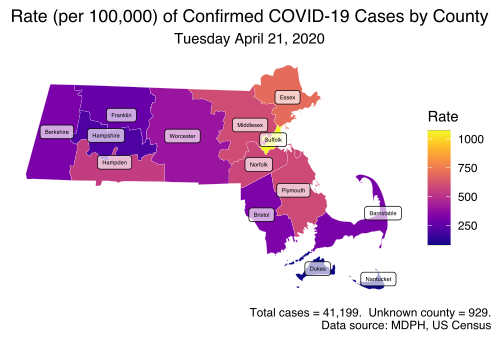
It was a sad day in Middlesex County. We still retain our lead in cases, though this is due to no germy merit of our own but merely a consequence of a population twice the size of the next largest county. Our county case rate is a middling 800 per 100,000 cases, despite a few hotspots like Everett, Lowell, Medford, and Malden.

No, it's a sad day today because the mayor of Somerville will no longer let residents walk around outdoors at a safe distance from other people without a mask. Somerville, a city of over 80,000, has had only 415 cases for the entire pandemic. This is a rather low case rate of 512 per 100,000 residents (though not as low as Brookline, with 335 cases per 100,000 residents and a similarly severe mask policy). Sadly, Somerville residents will now need to commute to Cambridge, Arlington, or germy Medford just to take a walk in the fresh air in compliance with CDC and WHO recommendations for mask usage rather than panicked non-medical mayoral fiat. (Alternately, the internet notes that you are not required to carry ID to walk around Somerville, nor are you required to reveal what particular medical condition prevents you from wearing a mask.)

PlagueBlog reminds readers that cloth masks pose their own real dangers (unlike the imagined dangers of fresh air and sunshine), and that the below-average citizen is more qualified to judge a distance of six feet outdoors than to use a ersatz mask safely for unnecessarily long periods.

P.S. I updated the county map for the occasion:

P.P.S. In an after-hours show of counter-productivity, Cambridge joined Somerville in inventing unnecessary face covering requirements outdoors, rather than following the CDC or state guidelines. PlagueBlog notes that Cambridge's case rate is comparable to Somerville's.

Sunday, April 26, 2020

Day 86: Race and Ethnicity

Though the world, the US, and New York State are all approaching some very large, round, case numbers, today Massachusetts had its smallest uptick since we began ticking up in earnest in early March: only 3%. It is a Sunday and one apparently never knows what's up at Quest (especially since the state stopped breaking out testing by laboratory), but it's promising nonetheless.

Many statistics have gone by the wayside in the course of the state's reporting, and others have appeared to replace them. The state is quite concerned about race and ethnicity, although these are hard things to track and the results still lean quite heavily to "Unknown/Missing". (Race and ethnicity are unknown for the majority of both total cases and deaths, and for a full 40% of hospitalized cases.)

The Worcester Telegram reports that "Latinos" make up 30% of hospitalized COVID-19 patients in Worcester County, while being only 11% of the population there, and blacks are 10% of patients but only 5% of residents. The Telegram doesn't speculate about why, but elsewhere this phenomenon has been partly attributed to a disparity in pre-existing conditions. For example, PlagueBlog readers may recall that obesity is a major risk factor for hospitalization with COVID-19; Massachusetts obesity statistics from 2011 showed that "Black adults were 43% more likely to be obese, and Hispanic adults were 40% more likely to be obese than White adults."

California has observed an even more disturbing trend of young blacks and Latinos (that is, 18–49-year-olds) dying at higher rates not only than whites and Asians of the same age, but also than older people (65+) of their own race or ethnicity, respectively. Some added risk comes from pre-existing conditions:
Blacks have been found to have higher rates of diabetes, high blood pressure, obesity and smoking-related deaths than whites, according to the Centers for Disease Control and Prevention. They have a lower life expectancy and are more likely to not see a doctor because of the cost, CDC data show.

Latinos have a lower death rate overall than whites, but a 50% higher death rate from diabetes along with higher rates of poorly controlled high blood pressure and obesity, according to the CDC.
The article speculates that the reason younger blacks and Latinos are more affected than the old is that they are more likely to live in crowded conditions, to still be working in the service sector during the pandemic, and to distrust the healthcare system or lack health care coverage. (This argument may apply to Massachusetts as well.) The article mentions in passing that Pacific Islanders are the worst off of the groups considered, but without any comment as to why.

Saturday, April 25, 2020

Day 85: Ecuador

The world's case count stands at 2.92 million, with over 200,000 deaths. The US is at 960,000 cases and 54,000 deaths. Both Turkey and New Jersey have now exceeded 100,000 cases. Ecuador is on the list at 22,000 cases and 574 deaths, but the New York Times reports the suspected number of deaths is fifteen times higher, because there were approximately 7,600 excess deaths in March and early April.

With the Quest-inspired jump yesterday, Massachusetts has exceeded 50,000 cases, but today's numbers have settled down to the usual 5% rise. The governor still considers us (and Connecticut) to be in the middle of the surge, while Vermont and New Hampshire are leaving surge territory, and New York and New Jersey are (allegedly) completely past the surge. Only Rhode Island has yet to surge; he thinks it will happen in a week. (Those Massachusetts folks with houses straddling the state line should exercise caution when entering their living rooms next week.)

The San Francisco Chronicle reports that, according to her father, Patricia Dowd (the California woman who was retroactively declared the first coronavirus death in the US) showed no symptoms at the time, though earlier reports said she'd told her brother she was too sick to attend a funeral. There's still no confirmation or denial that she attended CES, only that she hadn't travelled internationally.

A thousand-year-old mill in England has gone back into operation due to the demand for flour.

Friday, April 24, 2020

Day 84: Vegas Flu and DIC

APM Reports reports on an attendee at CES 2020 (the Consumer Electronics Show in Las Vegas this January 7th through 10th) who has since tested positive for COVID-19 antibodies. He recalls getting sick immediately after CES with what was referred to on Twitter at the time as "Vegas flu" which, in hindsight, sounds exactly like COVID-19: "Weeks later, people were still posting about the lingering coughs they just couldn't seem to shake." International attendees had come from various already-infected places in China, and returned to homes and businesses all over the world, including Silicon Valley in Santa Clara County, CA.

On the topic of the flu, pre-COVID-19 research indicated that the flu vaccine actually increased recipients' susceptibility to other respiratory diseases (for example, this journal article from 2012). One study even found a particular risk of catching coronaviruses. A Canadian study postulates a couple of direct immune mechanisms for the problem, including antibody-dependent enhancement (ADE). Note that the anti-protective nature of the flu vaccine is already a potential explanation for the variable mortality by age and country that others have previously attempted to explain by differing rates of (protective) BCG or MMR vaccination.

Also on the topic of the flu, a 107-year-old Spanish woman who survived the Spanish flu as a child has apparently recovered from COVID-19.

There's been a bit of a ruckus in the news about "mysterious clotting" in COVID-19 patients: the Washington Post goes on at length about it, apparently from the springboard of this earlier Reuters article. But disseminated intravascular coagulation (DIC) is no mystery. It's a known symptom of ARDS (acute respiratory distress syndrome), regardless of the cause of the ARDS itself. The Journal of Thrombosis and Haemostasis already has an accepted report up about it, and MedPage Today reported on the problem and possible treatments for it over two weeks ago.
"What really has become clear in the discussions in the last 2 weeks is that the COVID-19 disease is much associated with thrombosis: large vessel clots, DVT/PE [deep vein thrombosis/pulmonary embolism], maybe arterial events, and potentially small vessel disease, microvascular thrombosis," said Stephan Moll, MD, of the University of North Carolina at Chapel Hill Hemophilia and Thrombosis Center.

As U.S. cases have skyrocketed, it has also become clear that hospitalized patients often develop blood clots despite being on prophylactic anticoagulation, he told MedPage Today.
P.S. PlagueBlog was experimenting with some pretty maps of the increase in cases between the state's two reports of case counts by city and town, and noticed that Milford had dropped precipitously in case count in the course of 8 days. (There were other negative rate changes, but they were much smaller and more explicable by individual case reclassifications and the like.) Google provided no explanation for the 71 evaporated cases, but did provide a local news report of Milford's new standing among its neighbors at the state's increased reported rate of 114 cases.

Going back to the state, I saw they revised their data, allegedly at 7pm on the day they reported. PlagueBlog wasn't the only outlet to pick up the original numbers and the Middlefield craziness; MassLive reports on the small town's brief moment in the hospital and their return to a zero case count, and on other errors in the data. They also have a decent map of the updated data. PlagueBlog will issue our own corrected map later today.

P.P.S. Speaking of data errors, the Massachusetts case count leapt skywards today due to an eleven-day backlog/correction of lab results from Quest. Apparently the dashboard charts for today have been updated to reflect retroactively corrected daily counts (so today's jump was really only 6%), but the archives and the town-by-town data have not.

Thursday, April 23, 2020

Day 83: Recounting China

China is once again a moving target in the coronavirus country counts, having locked down the northern city of Harbin (population 10 million). Accounts of why the city has been locked down vary, with some sources blaming an asymptomatic student "surnamed Han" ex New York City, while other sources only blame the 87-year-old super-spreader man "surnamed Chen" who actually spread the disease through two hospitals to 78 people, without any specific claims about where he got it. Sequencing the new cases would be quite helpful, but PlagueBlog does not expect to hear any such results, at least not anytime soon.

Some brave researchers at the University of Hong Kong have pulled an estimate of China's true case numbers by modeling results for the most accurate of their constantly fluctuating case definitions. Unfortunately the data they used for modeling dried up after February 20th, so their estimate is only of the case count as of that date. But it's still a doozy: 232,000 cases instead of the official count at that time of 55,508 cases. You can read more about it in their Lancet article.

On the cat watch, some suspect feline cases we've already mentioned have been confirmed. As part of the official confirmation of the two housecats from New York state, it came out that one of their owners was not actually sick. The cat appears to have caught COVID-19 through community spread. The CDC is now recommending social distancing for both dogs and cats, but (based on the research reviewed in previous posts) PlagueBlog recommends you not worry about the dogs unless you yourself are ill.

National Geographic reports that seven more large felines at the Bronx Zoo have tested positive; only one of the seven was asymptomatic and unsuspected back at the time their first tiger was tested. There's still no direct evidence that a zookeeper infected them; it's just "the only thing that makes sense."

The governor of California is planning to dig up more bodies more autopsies of possible early COVID-19 deaths like those revealed in Santa Clara county yesterday. Those patients have been identified, and had no obvious connection to Wuhan. A microbiologist involved in sequencing SARS-CoV-2 nevertheless believes that the two early deaths will prove to be from a strain imported from Wuhan to Santa Clara county early on.

Massachusetts' numbers are up 7% today, with about 3,000 new cases. The governor encourages people to seek treatment for other serious illnesses, because hospital visits are lower than expected (even taking the reduced accident rate into account) and the hospitals are safe to visit.

Wednesday, April 22, 2020

Day 82: Retroactive Deaths and Mutant Strains

SFGate reports on three deaths in the San Francisco area recently attributed to COVID-19 through autopsy. Two of them predeceased the first official American death in Kirkland, WA on February 28th, having died at home in Santa Clara County on February 6th and 17th, respectively. The third retroactive death occurred on March 6th, three days before the first known COVID-19 death in the county on March 9th. Neither the article nor the press release reveals how long the samples have been lingering at the CDC, though the fact that they sent them there at all would indicate it's been a while.

There's a new strain theory making the rounds. This is not your grandfather's L vs. S strain theory, but a more general look into the mutability of the virus and its effects. The authors sequenced virus samples from a small, apparently random sample of patients in Hangzhou, China, all of whom had had early contact with cases ex Wuhan. According to the preprint:
Taken together, despite only 11 patient-derived isolates being analyzed in this study, we observed abundant mutational diversity, including several founding mutations for different major clusters of viruses now circulating globally. This diverse mutational spectrum is consistent with their relatively early sampling time and relative proximity to Wuhan city, where the first viral strain was identified. The full mutational diversity of the virus in Wuhan city in the early days is still unknown to this day, due to limited sampling.
They infected a cell line with their 11 strains and observed significant variation in viral load and CPE (cytopathic effects such as cell death) between the strains. Due to the complexity of disease course they did not attempt to evaluate the pathogenicity of the strains directly in humans, but they did note that
[t]he tri-nucleotide mutation in ZJU-11 is unexpected; we note that this specific viral isolate is quite potent in our viral load and CPE assay, and its patient remained positive for an astounding period of 45 days and was only recently discharged from the hospital.
There is some discussion of the similarity of some of their samples to strains found in Washington State and Europe; in vitro, their Washington-like strains produced significantly less viral load than their Europe-like strain.

PlagueBlog complained about the weird county rate map in the state's new dashboard. Here is our less eye-bleeding version, thanks again to R:
Click to enlarge. Later today the new town-by-town numbers should be out (hopefully not in as inaccessible a format as the PDF dashboard, though R prevailed over the PDF in the end with the help of tabulizer) and mapped.

P.S. Massachusetts' numbers are out for today. We are again only up 4%, though there was a big jump in deaths: 221 new deaths for a total of 2,182. The new towns and cities data wasn't there at 4pm as promised, but it is there now:


Click (and zoom) to enlarge. Something's up in the small town of Middlefield, whose rate is about 19,000 cases per 100,000 residents (due to having 89 cases and only about 500 residents). That forced me to switch to a log scale for the case rates. Chelsea, while no longer the obvious hotspot it was, is still in the running at #3. The top 10 cities and towns by case rate are now Middlefield, Winthrop, Chelsea, Brockton, Everett, Randolph, Lynn, Lawrence, Topsfield, and Revere. Holyoke is still #11, but Littleton has dropped pretty far down the list. There are still 24 towns (in gray) with no cases.

P.P.S. Most of that news turned out to be bad data from the state. The actual results were much like last week's, with the top cities being Chelsea, Brockton, Everett, Randolph, Lynn, Lawrence, Topsfield, Revere, Holyoke, and Danvers, but it did still work better on a log scale.

Tuesday, April 21, 2020

Day 81: Crisis and Denial

The world has surpassed 2.5 million cases, with about 172,000 deaths. Only about 660,000 cases are considered recovered. The UK is close to 125,000 cases, Turkey has reached 90,000, and Russia has now exceeded 50,000. The US is fast approaching 800,000 cases, with a full quarter million of them in New York State.

Prisons are proving to be a breeding ground for cases, though they haven't yet led to a significant number of deaths. NPR reported 73% of inmates infected (with no deaths) at the Marion Correctional Institution, an Ohio state prison. Because Ohio is making an unusual effort to test prisoners and staff, "the prison system now accounts for more than 20% of the state's cases."

Etymonline explained the etymology of "crisis", originally a Greek medical term, and its relations, along with "epidemic", "virus", "corona", "quarantine", "sanitize", "variolation", "hospital", "draconian", and "hoard".

At STAT, Helen Branswell attributes the international failure to act more promptly against COVID-19 to denial, while complicating the matter by calling it "magical thinking". Real magical thinking requires some belief that your irrelevant actions or thoughts will actually affect the world. It is not merely a baseless hope that the world isn't about to go to hell in a handbasket.

Inspired by Trump's tweeted threat to temporarily suspend immigration to the US, Bloomberg promises (or perhaps bemoans) that coronavirus will end immigration as we know it.

P.S. Massachusetts' prettier numbers are out; cases are up only 5% again. They've also added a (rather weird) county rate map, but no city-level maps so far.

P.P.S. Also, school's out for the rest of the year. Presumably "fake school" (as the kids call it these days) continues.

Monday, April 20, 2020

Day 80: Obesity is an Underlying Condition

Today's title is a public service announcement for the BBC, which appears to believe otherwise. They reported that a 51-year-old obese male nurse from Northumberland "did not have any underlying health conditions" when he died at home of a seemingly mild case of coronavirus. His daughter described him as "slightly overweight, but otherwise fit and healthy."

PlagueBlog notes that "otherwise" fitness is not known to negate your pre-existing conditions, and obesity has been observed to be the most significant underlying factor after age in NYC hospital admissions:
"Prior to COVID-19, we already knew that obesity is a risk factor for infection in general and more severe complications, and this is particularly true for respiratory infections," Poland said.

During the 2009 H1N1 epidemic in 2009, adults with body mass indexes over 30 were 3.1 times more likely to die from the infection than people of lower weights, while adults with body mass indexes over 40 were 7.6 times more likely to die.
In other world news, Spain has exceeded 200,000 cases, and Iran has exceeded China's case count. Next up is Russia, which, while comfortably under 50,000 cases at the moment, seems to have some trouble brewing. Reuters reports they've quarantined about 15,000 troops as part of cancelling Victory Day celebrations on May 9th.

It's Patriots' Day here in Massachusetts, but it doesn't feel the same without the Boston Marathon or the annual reenactment of the Battle of Lexington. In even more depressing news, the Boston Globe published 16 pages of obituaries this Sunday (April 19th), a significant increase over last year's seven page spread. (Reports of only 15 pages are inaccurate.) The previous Sunday's count was 11 pages, and a week before that it was nine.

P.S. Reuters reports that one of two additional Ebola patients in Beni, DRC, has escaped the treatment center and has not yet been found. The current case count is six, though one patient is still only known from the WHO's case count. Besides Ebola, the Congo is also battling COVID-19, measles, and cholera outbreaks.

P.P.S. Since the Massachusetts Department of Public Health appears to be taking Patriots' Day off of coronavirus reporting, PlagueBlog instead brings you another pair of Germ Boats. Lucky #26 and #27 are the Royal Caribbean sister ships Oasis of the Seas and Symphony of the Seas, respectively. (The latter is the world's largest cruise ship.) Three weeks ago, Royal Caribbean Cruises started evacuating sick crew off both ships to hospitals on the Florida mainland, without actually admitting to the coronavirus outbreak among the crew still on board. Today, the death toll among the ships' crew reached 3 with the death of a 41-year-old Indonesian man who had been a waiter on #26. A Filipino man who had been a bartender aboard #26 died on Saturday; his age has not been reported, though apparently he died on his birthday.

Back on Easter Sunday, a 27-year-old Indonesian man from the crew of #27 apparently became the youngest person to die of coronavirus in Florida. Because all three victims were foreign nationals they have not been included in the Florida statistics, so some details of their cases remain unclear. Royal Caribbean has refused to comment on these deaths or on how many infected crew remain in Florida hospitals and offshore.

P.P.P.S. The state did eventually cough up a pretty, if inaccessible, PDF dashboard of the day's numbers: cases were up 4%, with 103 new deaths.

Sunday, April 19, 2020

Day 79: Cryptic Cases

In world stats, Turkey has surpassed China in cases, and Iran is very close now. In New York (City or state was not specified), two housecats appear to have caught coronavirus from their (respective) sick owners. Here in Massachusetts, our Sunday numbers are depressed as usual, going up only 5%. Note that tomorrow is still a holiday in Massachusetts despite the postponement of the Boston Marathon, and the numbers may continue to reflect the long weekend rather than the medical situation.

According to a somewhat arbitrary standard published in the New York Times, Rhode Island is the only state doing anything like enough testing to reopen.

Several more surveys of asymptomatic cases have come out recently, including a random, anonymous test of 200 people healthy enough to walk the streets of Chelsea (Mass.), of whom 32% proved to have antibodies to coronavirus. The Boston Globe also reports that half of the participants had had symptoms of COVID-19 in the past month, but none had previously tested positive. Chelsea is by far the most infected part of the state per capita, so PlagueBlog recommends not projecting these numbers across the state. Because the subjects were anonymous there was no way to give them their test results, but if they follow the news perhaps they will consider their odds and get tested elsewhere.

LiveScience reports on a similar study in Santa Clara County that "suggested that between 2.5% and 4.2% of people in the county have contracted COVID-19, which is 50 to 85 times greater than the number of cases being reported at the time." The study has been criticized for overestimating the rate, either through massaging the percentage up from its raw value of 1.5%, for the self-selection bias of the volunteers, for potential false positives on the antibody test (which is not yet FDA approved), and also for not being ethnically representative (the only criticism which implies the rate should be higher than the study estimated).

A similar study has been done in Wuhan, where the official infection rate was about half a percent, but more than 2% of hospital employees had antibodies. In Italy, most residents of the small town where their first death occurred (Vò) were tested twice. The preprint results show 43% of cases were asymptomatic, across all age groups, and that several asymptomatic patients spread the disease to others in the same household.

On the pretty picture front, I've updated last week's Massachusetts case rate map with better estimates of case rates in towns with fewer than 5 cases. I don't have the actual population numbers the MDPH seems to be using, so I used numbers from the census' population estimates API:

Saturday, April 18, 2020

Day 78: No Evidence of Immunity

The world stands at 2.33 million cases with 160,000 deaths. The US has exceeded 738,000 cases and 39,000 deaths. The situation in Spain seemed to have calmed down over Easter, but is active again now and may only take another day or two to hit 200,000 cases. The UK, at 114,000 cases, remains in sixth place but is still a contender to surpass the flattening continent. Both Turkey and Iran are looking to surpass China's revised numbers soon.

In the US, the Navajo Nation has made the news with 1,042 cases (none recovered) and 41 deaths, surpassing a handful of states although their total population, about 357,000, is less than that of any state.

If you were hoping for more pretty pictures today, I can only point you toward these charts of the Massachusetts data by something innocuous, who also posts them to Reddit daily. Massachusetts is up 6% today. While we remain in third place in case count, three states behind us have more active cases than we do. Pennsylvania in particular has over 3,300 more active cases despite having 4,600 fewer cases overall, so looks like it could catch up to us soonish.

The Telegraph reports that the WHO has cautioned against relying on serology to prove immunity to COVID-19:
There is currently no evidence to support the belief that people who have recovered from coronavirus then have immunity, the World Health Organisation has said.

Senior WHO epidemiologists warned despite the hopes governments across the world have piled on antibody tests, there is no proof those who have been infected cannot be infected again.
Germ Boat #25 is the nuclear-powered aircraft carrier Charles de Gaulle, flagship of the French navy, with more that 1,000 cases, nearly half of the ship's crew. The outbreak grew "exponentially" around April 4th, and the ship has now returned to its home port of Toulon for disinfection. Attempts to trace the outbreak to prior stops in Brest and Cyprus have not yet yielded a definitive answer.

Germ Boat #23, the USS Theodore Roosevelt, continues to make the news for its 60% rate of asymptomatic cases. There is little other test data for groups of young, healthy people.

Boston's Pine Street Inn homeless shelter made the news on Wednesday when testing of the entire population revealed a 38% positive rate (146 cases), all of them asymptomatic. One person was moved to a hospital, and the rest were isolated in temporary facilities. No news of symptoms has emerged since.

The hand-wringers are wringing extra hard about whether the virus came out of a lab, perhaps because Nobel laureate Luc Montagnier, discoverer of HIV, is in the made-in-a-lab camp. The suspect Wuhan lab has now denied it came from there.

PlagueBlog should note that the current Ebola outbreak in the Democratic Republic of the Congo remains current, due to the discovery of three or four new cases (two deceased, one receiving treatment, and one known only from the WHO case count) a full forty days after the last case had been resolved and two days before the outbreak would have been declared over.

Friday, April 17, 2020

Day 77: During the Peak

Massachusetts' numbers are up 7% today. The governor has been saying for a few days now that he considers us in the midst of the peak, and that due to our planning, there is still significant availability of beds for both COVID-19 patients and other emergencies. The IHME projections have also been updated, and they predict tomorrow as our peak (day).

In my non-disease blog, I wrote up a bit of a tutorial about making the Massachusetts cities and towns infection rate map from yesterday, and also how to map the absolute case counts using the same data set:
Click (and zoom in as desired) to enlarge. (This actually works now, after some Blogger tweaking.) The colors are on a log scale for visibility. Towns in gray have no cases. The top ten cities case-wise are Boston, Brockton, Worcester, Lawrence, Lynn, Chelsea, Lowell, Springfield, Cambridge, and Revere, in that order.

Thursday, April 16, 2020

Day 76: COVID In, COVID Out

Massachusetts' numbers are up 7.5% today. Yesterday the state promised some extra data (h/t MassLive), but of course it took some digging around the website to find it. The state's numbers for hospital infections [PDF] include Steward Health Care hospitals and also suspected cases, which is probably why they're so much higher than the numbers from the Globe the other day. Buried elsewhere, there's also a chart of bed occupancy and capacity [PDF] by "region", including the beds in alternate sites like Corey Hill the BCEC.

The new town-by-town data [DOCX] conveniently includes the rate scaled to 100,000 "residents". (The vast majority of cities in Massachusetts don't actually have 100,000 residents, never mind the towns.) There is a promise to update the town-by-town data weekly, but nothing about maintaining the hospital data.

An archive of the daily reports has also appeared. Finding them had previously required the Wayback Machine to discover their somewhat unpredictable and sometimes misspelled URLs. The archive also includes the previously missing DOCX for March 9th. (PlagueBlog has not yet checked the full archive against our own archives for changes.)

Here is a long-awaited pretty picture, of the town-by-town case rates (per 100,000) through April 14th:
Click to enlarge. The yellow hotspot near Boston is Chelsea. The top 10 cities ratewise are: Chelsea, Brockton, Randolph, Williamstown, Lawrence, Everett, Longmeadow, Braintree, Revere and Norwood, in that order. Holyoke is #11 and Littleton is #14, presumably due to their nursing home issues.

I made up the rates for the places with <5 but more than 0 cases; next time I will find population data for those places in order to estimate them properly (though it's unlikely to change the map much).