In addition to the increases seen in emergency rooms, an outbreak of GI illness has occurred at Simmons College in Boston. As of December 15, eighty-one (81) students and staff have reported experiencing nausea, vomiting diarrhea and stomach cramps. Many of the affected individuals have reported being ill for approximately two days after symptoms began. The outbreak at the school appears to be on a downward trend with only a few new cases having been reported in the last several days. Early implementation of control measures including education on hand washing, availability and use of hand sanitizer, and increased frequency of restroom cleaning appears to have decreased the transmission of illness at Simmons.
Monday, December 18, 2006
Gastroenteritis in Boston
Via ProMED-mail: the Boston Public Health Commission advises Bostonians to wash their hands during the current outbreak of Norwalk-like illnesses.


Sunday, December 17, 2006
New Giant Microbes
GIANTmicrobes has some exciting new plushie microbes, including a cute curly Lyme disease and a red-eyed rabies virus.
Among their older products, E. coli is cute and timely, while TB is intriguingly horizontal.
Among their older products, E. coli is cute and timely, while TB is intriguingly horizontal.
Friday, December 08, 2006
Yo no quiero Taco Bell
Via ProMED-mail: The New York Times reports on the spreading Taco Bell E. coli outbreak.
Even as health officials and food distributors zeroed in yesterday on a California farm as the possible source of the contaminated green onions that have sickened Taco Bell customers, the E. coli outbreak widened considerably, with cases reported for the first time in New York City, Delaware, South Carolina and Utah.
In all, the number of cases that have been reported ballooned, to at least 169 yesterday, with most concentrated on Long Island and in New Jersey.
In New York, health officials said they were investigating 103 confirmed or suspected cases in 10 counties, up from 49 on Wednesday. Nearly three-quarters of the cases were found on Long Island, but cases were reported for the first time in New York City as well as Westchester, Rockland, St. Lawrence and Herkimer Counties.
In New Jersey, 12 new cases were reported, bringing the total to 55. There were no new cases reported in Pennsylvania, where seven people have been sickened thus far. In Delaware, one case was confirmed and another was suspected. According to federal health officials, “the vast majority of patients reported eating” at a Taco Bell.
Thursday, November 09, 2006
Big Whoop
Via ProMED-mail: The Boston Globe reports eight more staff members at Children's Hospital in Boston have been diagnosed with whooping cough, for a total of 33 to date.
Disease investigators have said they believe whooping cough was carried into Children's by a 19-month -old patient. They continue to investigate whether a 3-year-old girl who has the illness contracted it at the hospital or before she arrived there.
Barry said the eight additional cases reported yesterday do not reflect recent infections. Instead, she said, most of those staff members began displaying symptoms in mid-October. So far, no hospital workers or patients have faced life-threatening complications as a result of the outbreak.
Tuesday, October 31, 2006
Adopt A Microbe
Via Boing Boing: Adopt A Microbe.
The illustrations alone are a riot.
Hola. I'm C. jejuni.
I am a curved Gram Negative rod.
You can find me in lots of domestic animals.
I am part of the normal bacterial flora of poultry and cattle.
The illustrations alone are a riot.
Eyes Without a Face
In Wired this month: Face Blind, an article about prosopagnosia.
Developmental prosopagnosia came to light in large part because of Internet groups. Before that, most people born with the condition assumed they were just bad with faces. It's not the type of thing most would go to a doctor about, and even if they did, their physician probably couldn't help, because many doctors are unaware of it. In many ways, this is a neurological condition discovered by Yahoo.
Sunday, October 22, 2006
The Survivor
Via ProMED-mail: Regarding a recent case of symptomatic rabies, the aptly-named Wish TV reports on the Indiana State Department of Health's wild optimism.
By "near-fatal" Dr. Monroe means "only one person has ever survived": see Recovery of a Patient from Clinical Rabies --- Wisconsin, 2004.
"Historically it's a near fatal disease and so it's always touch and go, but given treatment today we're hopeful that this individual is going to survive this case," said Dr. Judith Monroe, Indiana State Department of Health.
By "near-fatal" Dr. Monroe means "only one person has ever survived": see Recovery of a Patient from Clinical Rabies --- Wisconsin, 2004.
Thursday, September 21, 2006
The Smoking Spinach Bag
Via ProMED-mail: The AP reports that health officials have pinned the E. coli outbreak on the prime suspect, spinach from the Salinas Valley.
A bag of tainted Dole baby spinach found in the refrigerator of a New Mexico patient was a "smoking gun" that allowed investigators to zero in on farms in the Salinas Valley.
The spinach tested positive for the same strain of E. coli linked to the outbreak. Dole is one of the brands of spinach recalled late last week by Natural Selection Foods LLC of San Juan Bautista, California.
Friday, September 15, 2006
Spinach Recall
I saw them taking away the bagged spinach at Whole Foods today. See the New York Times article or the FDA warning against bagged spinach:
The U.S. Food and Drug Administration (FDA) is issuing an alert to consumers about an outbreak of E. coli O157:H7 in multiple states that may be associated with the consumption of produce. To date, preliminary epidemiological evidence suggests that bagged fresh spinach may be a possible cause of this outbreak.
Based on the current information, FDA advises that consumers not eat bagged fresh spinach at this time. Individuals who believe they may have experienced symptoms of illness after consuming bagged spinach are urged to contact their health care provider.
Friday, August 25, 2006
Spam Sushi Poisoning
Via ProMED-mail: the Honolulu Star Bulletin reports on a rash of food poisoning on Maui caused by spam musubis:
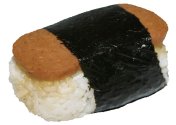
What's Cooking in America has more than you ever wanted to know about spam musubi, including a recipe and pictures of the mold:
Since July, nine people have become ill probably from food poisoning associated with Spam musubis sold at four stores in Central Maui, officials said yesterday.
Most of the ill have been children, ranging from ages 3 to 9, and two of them received emergency medical care, officials said.

What's Cooking in America has more than you ever wanted to know about spam musubi, including a recipe and pictures of the mold:
A favorite Hawaiian way to eat Spam is in the form of a musubi (pronounced moo-soo-bee, with no accent). It is a fried slice of spam on rice pressed together to form a small block, then wrapped with a strip of seaweed. A special kitchen gadget, known as the Spam Musubi Maker, is responsible for the proliferation of this treat. It is a special plexiglas mold with the outline of a single Spam slice. The Spam musubi is eaten as a sandwich, and it is perhaps the Island's favorite "to go" or snack food. Spam musubi is literally everywhere in Hawaii, including local convenience stores, grocery stores, school cafeterias, and even at the zoo. Eating a Spam musubi seems to serve as a rite of passage for newcomers anxious to attain "local" status.
Tuesday, August 22, 2006
Typhoid Rocky
The News & Star reports on the danger posed to native British red squirrels by American grey squirrels who carry parapoxvirus:
A deadly squirrel disease which only affects reds could see the species disappear from some of its last remaining English strongholds within a decade, new research revealed today.
Previously scientists believed that grey squirrels were wiping out native reds simply by taking over their habitats, but an international study has blamed a virus which they transmit to the red population, killing them within a fortnight.
Thursday, August 17, 2006
A Gene for Schizophrenia
Via Gene Expression: EurekAlert! on a gene that causes schizophrenia:
Earlier research [at Mount Sinai and elsewhere] suggests that schizophrenia is associated with changes in myelin, the fatty substance or white matter in the brain that coats nerve fibers and is critical for the brain to function properly. Myelin is formed by a group of central nervous cells called oligodendrocytes, which are regulated by the gene oligodendrocyte lineage transcription factor 2 (OLIG2). Patients with schizophrenia are known to have insufficient levels of oligodendrocytes, however the source of this [deficiency] has not been identified, explains study co-author Joseph D. Buxbaum, PhD, the G. Harold and Leila Y. Mathers Research Professor of Geriatrics and Adult Development, Professor of Psychiatry and Neuroscience, and Co-Principal Investigator of the Siliva O. Conte Center for the Neuroscience of Mental Disorders.
Dr. Buxbaum and a team of Mount Sinai researchers collaborated with researchers from the Cardiff University School of Medicine in the United Kingdom to analyze DNA in blood samples taken from 673 unrelated patients with schizophrenia and compared their genetic information to 716 patients who did not have the disease. The controls were matched for age, sex, and ethnicity; none were taking medications at the time of the study.
The study showed that genetic variation in OLIG2 was strongly associated with schizophrenia. In addition, OLIG2 also showed a genetic association with schizophrenia when examined together with two other genes previously associated with schizophrenia--CNP and ERBB4--which are also active in the development of myelin. The expression of these three genes was also coordinated. Taken together the data support an etiological role for oligodendrocyte abnormalities in the development of schizophrenia.
Tuesday, August 08, 2006
Don't Sue the Messenger
ProMED-mail reprints The Jakarta Post on yet another howler from Indonesia:
I believe this is the same area where angry poultry workers drank chicken blood to protest earlier diagnoses. Suing is, at least, more sanitary.
The parents of 3 young children from North Sumatra's Karo regency who were earlier reported as exhibiting classic bird flu symptoms plan to sue the provincial administration and the central government for saying their children most likely had bird flu.
I believe this is the same area where angry poultry workers drank chicken blood to protest earlier diagnoses. Suing is, at least, more sanitary.
Friday, July 28, 2006
Tick Time
The Associated Press reports that Lone Star ticks have been spotted in Maine and New Hampshire.
Should you meet a migrant or a local tick, the CDC has illustrated instructions for safe tick removal.
The ticks, which are named for a small white spot on their backs, used to be found only in the Southeast, but they have been reported in growing numbers in Rhode Island, Connecticut and Cape Cod in recent years.
Scientists don't believe they are established in Maine and New Hampshire yet: The few that have been found are probably straying travelers, and there's no clear evidence yet that they are surviving the winter and living out their entire life cycle in northern New England.
Should you meet a migrant or a local tick, the CDC has illustrated instructions for safe tick removal.
Wednesday, July 12, 2006
Johne's Disease in Western Australia
The Australian reports an outbreak of Johne's Disease in Western Australian cattle after a twelve year lull:
Johne's Disease is caused by Mycobacterium avium paratuberculosis and is suspected of causing Crohn's Disease in humans. The University of Wisconsin School of Veterinary Medicine has a webpage devoted to the controversy:
PARA, the Paratuberculosis Awareness & Research Association, has more information on the bacterial theory:
Bovine Johne's Disease was confirmed yesterday [July 10th] in a beef herd near Albany, about 400km south of Perth.
It is the first case of its kind in Western Australia since 1994, but Animal Health Australia said the disease was known to have infected about 1350 cattle herds in NSW, Victoria, South Australia and Tasmania.
The highly infectious disease, which is most common in dairy cows, wastes the animal's intestines, preventing the absorption of minerals and proteins.
Johne's Disease is caused by Mycobacterium avium paratuberculosis and is suspected of causing Crohn's Disease in humans. The University of Wisconsin School of Veterinary Medicine has a webpage devoted to the controversy:
The triggering event for Crohn's disease is thought to occur early in life and then be followed by a 15-30 year incubation or latency period. Johne's disease also has a long interval between infection with M. paratuberculosis and onset of clinical signs (2-10 years). Clinical signs in both diseases are seldom seen before sexual maturity. Interestingly, a strong inverse relationship was found between Crohn's disease and gastric cancer using data from 26 countries.
PARA, the Paratuberculosis Awareness & Research Association, has more information on the bacterial theory:
In the early 1900's, the disease we call today "Crohn's disease" was characterized as an infectious disease, specifically intestinal tuberculosis. However, by the early 1930's, definitive classification (proof) that this disease was infectious was not forthcoming. More specifically, when Dr. Burrill B. Crohn failed to prove an infectious cause in 1932, the disease became formally known as "Crohn's disease" (named after Dr. Crohn) and the search for an infectious cause was largely discontinued.
Wednesday, July 05, 2006
Kuru in the 21st Century
Via ProMED-mail: A paper in The Lancet [registration required even to see the abstract] establishes the incubation period for Kuru, the famous cannibal prion disease, and makes some ominous predictions about the future of mad cow disease:
Another paper in PNAS also indicates that many more people than the current victims may eventually come down with a new and unknown variant of mad cow disease:
We identified 11 patients with kuru from July 1996, to June 2004, all living in the South Fore. All patients were born before the cessation of cannibalism in the late 1950s. The minimum estimated incubation periods ranged from 34 to 41 years. However, likely incubation periods in men ranged from 39 to 56 years and could have been up to 7 years longer. PRNP [the prion protein gene] analysis showed that most patients with kuru were heterozygous at polymorphic codon 129, a genotype associated with extended incubation periods and resistance to prion disease.
Interpretation
Incubation periods of infection with human prions can exceed 50 years. In human infection with BSE prions, species-barrier effects, which are characteristic of cross-species transmission, would be expected to further increase the mean and range of incubation periods, compared with recycling of prions within species. These data should inform attempts to model variant CJD epidemiology.
Another paper in PNAS also indicates that many more people than the current victims may eventually come down with a new and unknown variant of mad cow disease:
All neuropathologically confirmed cases of variant Creutzfeldt-Jakob disease (vCJD), characterized by abundant florid plaques and type 4 disease-related prion protein (PrPSc) in the brain, have been homozygous for methionine at polymorphic residue 129 of PRNP. The distinctive neuropathological and molecular phenotype of vCJD can be faithfully recapitulated in Prnp-null transgenic mice homozygous for human PrP M129 but not V129, where a distinct prion strain is propagated. Here we model susceptibility of 129MV heterozygotes, the most common PRNP genotype, in transgenic mice and show that, remarkably, propagation of type 4 PrPSc was not associated with characteristic vCJD neuropathology. Depending on the source of the inoculum these mice can develop four distinct disease phenotypes after challenge with bovine spongiform encephalopathy (BSE) prions or vCJD (human-passaged BSE) prions. vCJD-challenged mice had higher attack rates of prion infection than BSE-challenged recipients. These data argue that human PRNP 129 heterozygotes will be more susceptible to infection with vCJD prions than to cattle BSE prions and may present with a neuropathological phenotype distinct from vCJD.
Saturday, July 01, 2006
Attack of the Killer Tomatoes
New Scientist reports on genetically modifying tomatoes with viral DNA to create cheap, edible vaccines for hepatitis B and HIV:
Mice fed a solution containing the tomatoes in powdered form developed high levels of antibodies in their blood to both viruses. Equally important, the researchers found antibodies on mucosal surfaces, where the viruses can gain entry to the body through sexual contact. "That's where you want it to be protective," says Rose Hammond of the US Department of Agriculture's Agricultural Research Service in Beltsville, Maryland, which is collaborating with the Russian researchers.
Thursday, June 22, 2006
Yet More Measles
The Boston Globe reports that the number of measles cases in Boston has risen to fourteen:
The patient, a woman in her early 20s, has recovered from the disease and is back at work at Hill Holiday, a communications company in the John Hancock Tower, where the outbreak began. No other suspect cases have been identified within Hill Holiday. For more information on measles, visit www.bphc.org, the Boston Public Health Commission's website, or www.state.ma.us/dph, the Department of Public Health's website.
Wednesday, June 21, 2006
Plague Central
Not surprisingly, the WHO reports on an outbreak of pneumonic plague in the Democratic Republic of the Congo:
Pneumonic plague, while apparently common during the Black Death (1347-51), has been rare in later outbreaks. Thanks to an anonymous source for the tip.
Bonus link: See Snopes debunk "Ring Around the Rosie."
Ituri is known to be the most active focus of human plague worldwide, reporting around 1000 cases a year. The first cases in this outbreak occurred in a rural area, in the Zone de Santé of Linga, in mid-May.
Pneumonic plague, while apparently common during the Black Death (1347-51), has been rare in later outbreaks. Thanks to an anonymous source for the tip.
Bonus link: See Snopes debunk "Ring Around the Rosie."
Thursday, June 08, 2006
Born Free-Range
Via ProMED-mail: The Guardian reports on the ongoing bird flu debate over whether industrial poultry or wild birds are largely responsible for spreading the disease:
Grain's alternative theory for the emergence of H5N1 - which got backing in an editorial in the Lancet medical journal last month - starts with the observation that bird flu has coexisted pretty peacefully with wild birds, small-scale poultry farming and live markets for centuries without evolving into a more dangerous form of the disease. An explanation for this is that outdoor poultry flocks tend to be low-density, localised, and offer plenty of genetic diversity in breeding stock. By contrast, the hi-tech, intensive poultry farm, where as many as 40,000 birds can be kept in one shed and reared entirely indoors without ever seeing the light of day, is just like an overcrowded nursery of wheezy toddlers when the latest winter bug comes knocking - an ideal environment for spreading the disease and for encouraging the rapid mutation of a mild virus into a more pathogenic and highly transmissible strain, such as H5N1. "What we are saying is that H5N1 is a poultry virus killing wild birds, not the other way around," says Devlin Kuyek, from Grain.
Subscribe to:
Posts (Atom)